This article was last updated on:
TL;DR: To increase e-commerce website traffic, brands need more than paid ads. The most sustainable growth comes from partnering with publishers who drive qualified audiences, optimising landing pages to convert that traffic, and building audience trust through consistent product promotion. This guide covers how affiliate marketing, publisher partnerships, and smart landing page strategy work together to grow traffic across e-commerce stores, mobile apps, desktop software, and subscription services.
Traffic is the lifeblood of any online business. But knowing how to increase e-commerce website traffic in a way that is sustainable, cost-efficient, and genuinely conversion-ready is a challenge most brands underestimate. Paid ads get expensive. SEO takes time. Social media algorithms are unpredictable.
And yet, some brands consistently grow their traffic year after year – often by doing something their competitors overlook: building a network of publishers who send qualified, intent-rich audiences directly to their digital front door.
This guide is for brands – whether you run an e-commerce store, a mobile app, a desktop software product, or a subscription service – who want to understand how to build a traffic engine that grows compounding returns over time. We’ll cover affiliate marketing, the role of publishers, landing page optimisation, audience trust, and how Involve Asia sits at the centre of all of it.

Why Is E-commerce Website Traffic So Hard to Grow Sustainably?
Most brands start their traffic journey with paid advertising. It works, at first. But as competition increases, CPMs rise, click costs climb, and ad fatigue sets in. The moment you stop spending, the traffic stops too. That’s the fundamental problem with paid media as a primary traffic strategy: it’s rented, not owned.
SEO offers a more durable alternative, but the timeline is long – often six to twelve months before meaningful organic traffic arrives. Social media can drive spikes, but algorithm changes and short content lifespans make it unreliable as a base layer. Email marketing is excellent for retention, but rarely drives net-new audience discovery at scale.
The brands that grow e-commerce website traffic most efficiently use a different model entirely: they partner with publishers who have already built the audiences they want to reach, and they pay only when those audiences convert. This is affiliate marketing – and it’s one of the most underleveraged traffic strategies available to online brands today.
Read: Affiliate Marketing vs Paid Ads – All You Should Know
How Does Affiliate Marketing Increase E-commerce Website Traffic?
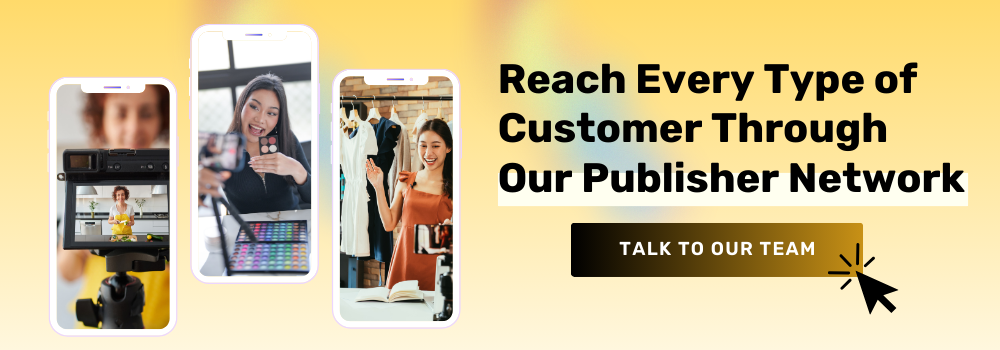
Affiliate marketing drives traffic by activating a network of publishers – bloggers, content creators, deal sites, cashback platforms, coupon aggregators, email marketers, and social media influencers – who promote your brand to their established audiences in exchange for an affiliate commission on each conversion.
Every piece of publisher content that features your brand is a new traffic source. A product review by a tech blogger, a cashback listing on a deals platform, a YouTube comparison video, a newsletter recommendation – each one sends a stream of qualified visitors directly to your website or app store listing. Unlike a single paid ad, these content pieces can drive traffic for months or years after they’re published.
The scale is significant. According to Shopify’s affiliate marketing statistics report, the affiliate marketing industry has grown 83% since 2017, and according to FirstPromoter, around 62% of affiliate-driven traffic now comes from mobile devices, making it one of the most mobile-aligned traffic channels available.
What makes affiliate traffic particularly valuable is its intent level. A visitor who clicked through from a product review or a “best of” listicle is far closer to purchase than someone who saw a display ad in passing. Publishers pre-qualify your audience before they arrive on your site – which means higher conversion rates, lower bounce rates, and better long-term customer value.
Why Are Publishers the Most Powerful Traffic Source for Brands?
Publishers are not just traffic channels – they are trust intermediaries. When a respected blogger recommends your product, a cashback platform lists your offer, or an influencer demonstrates your app, they transfer their credibility to your brand. That trust is something no amount of paid media can replicate.
Publishers reach audiences you can’t reach alone
Every publisher has a distinct audience they’ve spent months or years building. A travel content creator has the travel intenders. A tech reviewer has the gadget buyers. A personal finance blogger has savings-focused consumers. By activating publishers across categories, brands can tap into audience segments that would be expensive or impossible to reach through their own channels.
This is especially powerful in Southeast Asia, where publisher ecosystems – cashback apps, deal communities, lifestyle blogs, and social commerce platforms – are deeply embedded in how consumers discover and evaluate products before purchasing. Involve Asia’s network connects brands with over one million publishers across the region, giving advertisers instant access to audiences they’ve never had to build themselves.
Publisher content compounds over time
Unlike a paid ad that disappears when the budget runs out, publisher content – a review article, a YouTube video, a comparison post – continues driving traffic as long as it ranks, circulates, or remains accessible. This creates a compounding traffic effect: the longer a publisher program runs, the more content exists across the internet promoting your brand, and the more traffic flows from it without additional spend.
Publishers diversify your traffic sources
A brand relying on a single traffic source – whether it’s Google Ads, Facebook, or organic search – is vulnerable. Algorithm updates, policy changes, or rising auction costs can cause overnight drops. Publisher-driven affiliate traffic diversifies your sources across dozens or hundreds of independent content channels, making your overall traffic profile far more resilient.
Does Affiliate Marketing Work for Mobile Apps, Desktop Apps, and Subscriptions Too?
This is one of the most underappreciated aspects of affiliate marketing. The model is not limited to e-commerce product sales. It is equally powerful for driving installs, sign-ups, trials, and subscriptions across every digital product type.
Mobile apps (CPI model)
For mobile apps, affiliate marketing runs on a cost-per-install (CPI) model. Publishers drive users to your app store listing, and you pay only when an install is confirmed. This is one of the most cost-efficient user acquisition channels for apps, particularly in markets with high mobile penetration like Southeast Asia, where mobile devices account for 78–82% of e-commerce traffic according to Hashmeta’s 2025 SEA e-commerce analysis.
Publishers who review apps, produce “best apps” roundups, or create tutorial content are particularly effective at driving motivated installs – users who have researched the app before downloading, leading to higher retention and lifetime value compared to users acquired through paid installs.
Desktop software and SaaS
For desktop software and SaaS products, affiliate marketing typically runs on either a CPS (cost-per-sale) or CPL (cost-per-lead) basis. Tech bloggers, comparison sites, and productivity-focused YouTubers are effective publishers for this category. A well-placed affiliate review of a productivity tool, design application, or business software can drive trial sign-ups and paid conversions at significantly lower CAC than paid search in competitive SaaS categories.
Involve Asia supports SaaS and digital product affiliate programs, with commission structures tailored to subscription-based revenue models where lifetime value justifies higher upfront payouts to publishers.
Subscription services
Subscription businesses – streaming platforms, membership services, digital content subscriptions, software-as-a-service – are ideally structured for affiliate marketing because the recurring revenue model allows for generous commissions without eroding margins. A publisher who drives a subscriber paying $20/month provides far more long-term value than a one-time product purchaser, which means subscription brands can afford to pay publishers well and still maintain strong unit economics.
The key for subscription brands is defining the conversion event clearly: is the goal a free trial start, a paid subscription activation, or a specific plan tier? Defining this upfront ensures publishers optimise their promotion for the right outcome and your affiliate traffic delivers genuine business value, not just top-of-funnel noise.
Why Does Landing Page Optimisation Determine Whether Traffic Converts?
Driving traffic to your website is only half the equation. What happens when that traffic arrives determines whether your investment in publishers, content, and affiliate commissions actually pays off. A poorly optimised landing page wastes every click – and in affiliate marketing, every unconverted click is a commission cost with no return.
What the data says about landing page performance
According to Unbounce’s Q4 2024 Conversion Benchmark Report – based on analysis of 41,000 landing pages with 464 million visitors – the median landing page conversion rate across all industries is 6.6%. A rate of 10% puts you well above average; top-performing pages consistently hit 11% or higher. That gap between 6.6% and 11% represents a near doubling of conversions from the same volume of affiliate-driven traffic.
Page speed is one of the single biggest variables. Research cited by Fibr shows that pages loading in one second convert three times higher than pages loading in five seconds. For affiliate traffic coming from mobile devices – which now makes up the majority of clicks in Southeast Asian markets – slow-loading pages are conversion killers.
What a high-converting affiliate landing page looks like
The best landing pages for affiliate-driven traffic share several characteristics:
- Message match – The landing page copy and offer align exactly with the publisher content that drove the click. If a cashback publisher advertised “10% off your first order,” the landing page must confirm that offer immediately.
- Single, clear CTA – One primary action: buy, install, sign up, or start a trial. Multiple competing CTAs dilute attention and reduce conversions.
- Mobile-first design – With the majority of affiliate clicks arriving on mobile, a desktop-first page with pinch-to-zoom text and tiny buttons is a conversion liability.
- Social proof – Customer reviews, ratings, and user counts reduce purchase hesitation. Pages with social proof convert up to 34% better than those without, according to data compiled by Fibr.
- Fast load time – Aim for under two seconds. Every additional second of load time erodes conversions measurably.
A/B test relentlessly
Landing page optimisation is not a one-time fix. The brands that consistently outperform on affiliate conversion rates are those that run continuous A/B tests on headlines, CTAs, hero images, social proof placement, and offer framing. Even minor changes – a clearer headline, a more urgent CTA, a testimonial above the fold – can move conversion rates by several percentage points, which compounds into significant revenue at scale.
Your EPC (earnings per click) – the metric publishers use to evaluate how well your offer converts their traffic – rises directly with your landing page conversion rate. A higher EPC makes your affiliate program more attractive to top publishers, which drives more traffic, which gives you more data to optimise against. It’s a virtuous cycle, and it starts with the landing page.
How Do Publisher Promotions Build Audience Trust in Your Brand?
One of the most durable benefits of affiliate marketing for traffic growth is something that doesn’t show up directly in your analytics dashboard: trust. When a publisher promotes your brand to their audience, they lend their credibility to your product. And trust is the variable that separates browsers from buyers.
Third-party endorsement outperforms brand-owned messaging
Consumers are increasingly sceptical of advertising. They tune out banner ads, skip pre-roll video, and scroll past sponsored posts. But they actively seek out and trust recommendations from content creators, reviewers, and communities they follow. A product review from a publisher whose opinion the reader values carries far more persuasive weight than anything your brand says about itself.
This trust effect accelerates with repeated exposure. When a consumer encounters your brand through multiple independent publishers – a review here, a cashback listing there, a YouTube recommendation, a newsletter mention – each touchpoint reinforces that your brand is legitimate, credible, and worth considering. This multi-publisher exposure builds brand familiarity and trust at scale, often before the consumer even visits your website for the first time.
Publisher content supports the full customer journey
Different publisher types support different stages of the buying journey:
- Content and review publishers – Reach consumers in the research and consideration phase. A detailed product review or comparison article answers the key questions that prevent purchase.
- Coupon and cashback publishers – Reach consumers at the decision stage, providing the final incentive to convert from consideration to purchase.
- Social and influencer publishers – Drive discovery and awareness, often reaching consumers before they’re actively searching for your product category.
- Email publishers – Reach existing, highly engaged audiences with high purchase intent and established trust in the sender.
By activating publishers across all four types, brands ensure their product is present and credible at every stage of the customer journey – not just at the bottom of the funnel where most ad budgets concentrate.
User-generated content and community trust
Publishers who create genuine content about your product – unboxing videos, tutorials, honest reviews, before-and-after demonstrations – generate user-facing content that prospective customers actively seek out. This content exists independently of your brand’s marketing materials and carries the authentic voice that drives trust. The more publishers create this kind of content about your brand, the more your credibility compounds in the eyes of your target market.
How Does Involve Asia Help Brands Increase E-commerce Website Traffic?
Involve Asia is Southeast Asia’s leading affiliate marketing network, connecting brands with over one million publishers across Malaysia, Indonesia, the Philippines, Thailand, Vietnam, Singapore, and beyond. For brands looking to increase e-commerce website traffic in the region, Involve Asia provides the infrastructure, publisher relationships, and performance tracking to make affiliate-driven traffic growth systematic and measurable.
Instant access to a pre-built publisher ecosystem
Rather than spending months identifying and approaching individual publishers, brands that join Involve Asia as advertisers gain immediate visibility in a publisher marketplace where thousands of active publishers are actively looking for offers to promote. Your brand appears in front of content creators, deal sites, cashback platforms, and influencers who already have the audiences you want to reach.
Support for every digital product type
Involve Asia supports e-commerce (CPS), lead generation (CPL), and app install (CPI) programs – making it equally powerful for online stores, mobile apps, desktop software, and subscription services. Commission structures are fully customisable, and GEO-specific rates let brands prioritise the markets that matter most to their growth strategy.
Real-time performance tracking
The Involve Asia dashboard gives brands live visibility into clicks, conversions, revenue, publisher performance, and GEO breakdown. This data enables continuous optimisation: identifying which publishers drive the highest-quality traffic, which landing pages convert best, and where to increase commission investment for maximum return.
Dedicated account management and marketing support
Involve Asia’s account team actively supports brands with publisher outreach, commission upsize events, creative asset distribution, and campaign briefing – the operational work that separates a well-managed affiliate program from a stagnant one. For brands looking to increase affiliate sales, this support infrastructure is a significant advantage.
What Mistakes Stop Brands from Growing Their E-commerce Traffic Through Affiliates?
- Sending affiliate traffic to the homepage – The homepage is rarely the best landing destination for affiliate traffic. Publishers drive intent-specific clicks that should land on the most relevant product, category, or offer page. Use deep links.
- Ignoring mobile experience – With the majority of affiliate clicks arriving on mobile, a landing page that isn’t optimised for smartphones is leaving conversions on the table before the visitor has even read the headline.
- Under-investing in publisher relationships – Publishers who feel ignored or unsupported by a brand move on to better-managed programs. Regular communication, strong creative assets, and fair commission rates are the minimum to retain quality publishers.
- Setting conversion events incorrectly – For apps and subscriptions, define the conversion event carefully. “Install” is not the same as “paid activation.” Make sure your affiliate program pays for the outcome that actually matters to your business.
- Not refreshing creative assets – Outdated banners and stale promotional copy reduce publisher placement rates. Update your creative suite regularly to stay relevant and give publishers fresh material to work with.
Conclusion
Learning how to increase e-commerce website traffic sustainably means moving beyond the paid-ad treadmill and building a channel that grows compounding returns over time. Affiliate marketing – powered by publisher partnerships through a network like Involve Asia – provides exactly that: qualified, intent-rich traffic from audiences that publishers have already built and already trust them.
Whether you sell physical products, run a mobile app, offer desktop software, or operate a subscription service, the fundamentals are the same: activate the right publishers, optimise the landing pages they send traffic to, and let the trust publishers have built with their audiences work in your favour.
Key takeaways:
- Publisher-driven traffic is intent-rich and pre-qualified, leading to stronger conversion rates than most paid media traffic.
- The model works equally well for e-commerce stores, mobile apps (CPI), desktop software (CPS/CPL), and subscription services.
- Landing page optimisation is critical – the median conversion rate is 6.6%, but top-performing pages hit 11%+. The gap is traffic that converts vs. traffic that bounces.
- Publishers build audience trust at scale, supporting every stage of the customer journey from discovery to purchase.
- Involve Asia connects brands with over one million publishers across Southeast Asia, with full support for all digital product types and real-time performance tracking.
Ready to launch a cost-efficient growth channel? Click the button below to register your interest today.
About the Author

Frequently Asked Questions (FAQs)
How long does it take for affiliate marketing to increase e-commerce website traffic?
Initial traffic from publisher promotions can appear within days of going live, particularly from cashback and deal publishers who list offers quickly. Content publishers – bloggers and review sites – take longer as their articles need time to be indexed and rank. Meaningful, consistent traffic growth typically develops over two to four months as more publishers activate and content accumulates across the web.
Does affiliate marketing work for driving traffic to a mobile app, not just a website?
Mobile app affiliate programs run on a CPI (cost-per-install) model, where publishers drive users to your app store listing and earn a commission per confirmed install. This is one of the most cost-efficient user acquisition channels for apps, particularly in Southeast Asia, where mobile internet penetration is extremely high. App review publishers, “best apps” listicle creators, and tutorial content creators are especially effective for this model.
What types of publishers are best for increasing e-commerce website traffic?
Different publisher types serve different traffic goals. Cashback and coupon publishers drive high-volume, bottom-of-funnel traffic from consumers ready to buy. Content and review publishers drive high-intent, mid-funnel traffic from consumers researching before purchase. Influencers and social publishers drive top-of-funnel discovery traffic. Email publishers drive high-conversion traffic from engaged, trusted audiences. The best programs activate a mix of all four types for full-funnel traffic coverage.
How important is landing page speed for affiliate traffic from mobile devices?
Landing page speed is an important factor in bringing affiliate traffic. Research shows that pages loading in one second convert three times higher than those loading in five seconds. Since the majority of affiliate traffic in Southeast Asia arrives on mobile, a slow landing page is one of the most damaging conversion barriers a brand can have. Aim for a load time under two seconds on mobile – and test regularly on real mobile networks, not just desktop Wi-Fi.
How does Involve Asia help brands grow e-commerce traffic in Southeast Asia?
Involve Asia connects brands with over one million vetted publishers across Malaysia, Indonesia, the Philippines, Thailand, Vietnam, Singapore, and beyond. Brands launch their affiliate program – supporting CPS, CPL, or CPI conversion models – and gain immediate visibility in a publisher marketplace where active publishers are looking for offers to promote. Dedicated account management, real-time performance tracking, and marketing support make it one of the most complete affiliate traffic solutions for brands growing in Southeast Asia.