This article was last updated on:
TL;DR: Affiliate marketers are individuals or businesses that promote other brands’ products or services in exchange for a commission on each result they drive – a sale, a lead, an app install, or a click. They don’t need to create their own products, hold inventory, or handle customer service. They earn by connecting the right audience to the right offer. This guide explains exactly what affiliate marketers do, how they make money, what types exist, and how to get started as a publisher on Involve Asia’s network across Southeast Asia.
If you’ve ever clicked a link in a blog post, a YouTube description, or a social media caption that took you to a product – and the creator earned a small commission when you bought – you’ve already encountered an affiliate marketer in action.
What are affiliate marketers exactly? They’re the publishers, creators, and digital entrepreneurs who sit between brands and consumers, driving discovery, consideration, and conversion in exchange for performance-based income.
Affiliate marketing is one of the fastest-growing ways to earn online. Whether you’re a blogger, content creator, social media influencer, app developer, or simply someone who wants to start earning commissions online, this guide gives you the full picture of what affiliate marketers are, how they work, and how Involve Asia can help you turn your audience into a reliable income stream.

What Is an Affiliate Marketer, Exactly?
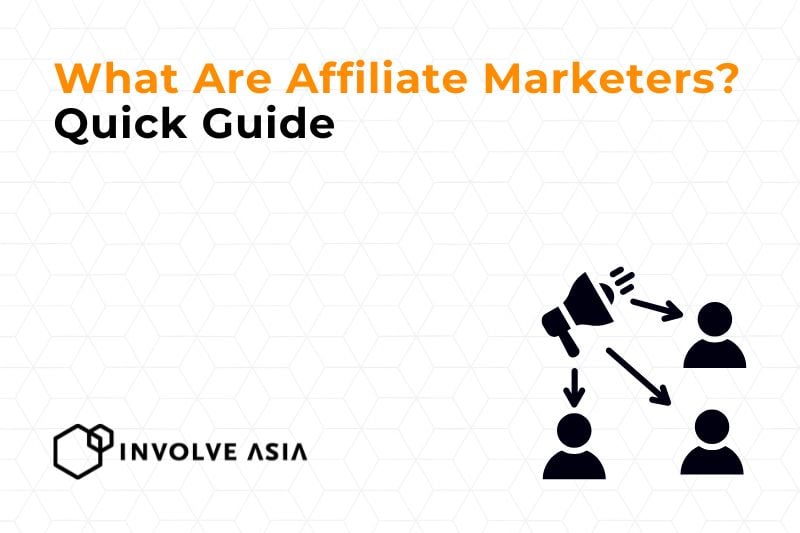
An affiliate marketer is a publisher or an affiliate partner – someone who promotes a brand’s products or services to their audience and earns an affiliate commission every time that audience takes a defined action as a result. That action might be making a purchase, submitting a lead form, installing an app, or completing a registration.
The relationship works through three parties:
- The brand (advertiser) – A company that wants to acquire more customers. They create an affiliate program, define what they’ll pay commission on, and provide publishers with tracking links and creative assets.
- The affiliate marketer (publisher) – The person or business that promotes the brand’s offer to an audience through content, social media, email, ads, or any other channel, using a unique tracking link that attributes conversions back to their promotion.
- The affiliate network – A platform like Involve Asia that connects brands and publishers, manages tracking and attribution, and handles commission payments. Networks make it easy for publishers to find programs to join and for brands to find publishers to promote them.
The fundamental appeal of affiliate marketing for publishers is straightforward: you don’t need to create your own product, manage inventory, handle shipping, or deal with customer service.
You focus on what you’re already doing – creating content, building an audience, running social channels, or reviewing products – and you monetise that activity by driving results for brands who are willing to pay for them.
How Do Affiliate Marketers Make Money?
Affiliate marketers earn through commission – a payment from a brand every time someone from their audience completes a defined action via their unique tracking link. The structure of that commission varies depending on the type of program and the brand’s goals.
The main commission models
- CPS (cost-per-sale) – You earn a percentage of each sale made by customers who clicked on your affiliate link. This is the most common model in e-commerce affiliate programs. Commission rates can vary depending on the product category, with fashion, beauty, and digital products at the higher end and electronics at the lower end.
- CPL (cost-per-lead) – You earn a fixed amount for each qualified lead – a form submission, sign-up, or free trial start – generated through your link. Finance, insurance, and SaaS programs commonly use this model.
- CPI (cost-per-install) – You earn a fixed amount for each app install confirmed through your link. Mobile app publishers – bloggers who review apps, YouTube creators who showcase them, or social media accounts that recommend them – earn CPI commissions. Rates vary by GEO and app category.
- CPA (cost-per-action) – You earn a commission when a user completes a specific action through your affiliate link, such as signing up, creating an account, downloading an app, or submitting a form. CPA affiliate programs are commonly used in finance, SaaS, subscriptions, and digital services because advertisers only pay for measurable user actions.
How tracking links work
Every affiliate marketer receives a unique tracking affiliate link for each brand or each product they promote. When a visitor clicks your link, a cookie is placed in their browser that identifies you as the referring publisher.
If that visitor completes the target action – buying a product, installing an app, submitting a lead – within the cookie window (typically 30 days), the conversion is attributed to you and a commission is recorded. Your earnings are tracked in real time in your affiliate dashboard, and commissions are paid on a regular schedule once approved by the brand.
Passive vs. active earning
One of the most appealing aspects of affiliate marketing is that it can generate passive income – earnings from content you created once that continues to drive conversions long after publication. A product review article that ranks in Google, a YouTube video that stays discoverable, or an app recommendation in a newsletter archive can all generate commissions months or years after they were first published.
This compounding nature of affiliate income is what makes it particularly attractive for content creators who invest in evergreen formats.
What Types of Affiliate Marketers Are There?
Affiliate marketing is not a single model – it encompasses a wide range of publisher types, each with a different audience, content format, and promotional approach. Understanding which type fits your existing skills and channels is the most important first step in becoming an effective affiliate marketer.
Content publishers and bloggers
Bloggers and editorial content creators write product reviews, comparison articles, how-to guides, and category roundups that rank in search engines and attract readers who are actively researching a purchase decision. In the US, affiliate publishers make almost 40% of their income from articles and blogs, according to DemandSage.
Content is one of the highest-quality traffic sources in affiliate marketing because readers arrive with clear intent – they’re researching before buying, not browsing passively. Content publishers typically earn CPS commissions from e-commerce and travel programs, and CPL commissions from finance and SaaS programs.
Social media and influencer publishers
Creators on TikTok, Instagram, YouTube, and Facebook promote products to their followers through sponsored content, honest reviews, unboxings, tutorials, and lifestyle integration. Influencer affiliate marketing has grown substantially – creator-driven affiliate revenues were projected to reach $1.3 billion in 2025.
The key advantage of influencer publishing is audience trust: followers act on recommendations from creators they admire, making influencer-driven conversions particularly strong for products that benefit from demonstration or aspirational association. Social media publishers typically use CPS programs for product promotions and CPI programs for app recommendations.
Email and newsletter publishers
Publishers with engaged email subscriber lists promote relevant affiliate offers directly to inboxes – in dedicated product features, weekly roundups, or deal digests. Email affiliate marketing delivers some of the highest conversion rates because subscribers have opted in to receive recommendations from a trusted voice.
According to Marketing LTB, affiliates who use email marketing earn 66.4% more than those who don’t. A well-curated newsletter in a specific niche – personal finance, travel, tech, health – can build a loyal audience that converts consistently on relevant affiliate recommendations.
Cashback and deal publishers
Cashback platforms, coupon aggregators, and deal communities promote offers to consumers who are actively looking for the best price before completing a purchase. These publishers typically operate as businesses rather than individuals, driving high purchase volume at the bottom of the conversion funnel.
They earn CPS commissions on a very large number of transactions, making volume the core of their revenue model. In Southeast Asia, cashback culture is deeply embedded – platforms like ShopBack have millions of active users who regularly discover and purchase through cashback offers.
Paid media publishers
Performance-driven publishers who buy ad space – on search engines, social platforms, display networks, or native ad platforms – and direct that traffic to brands through affiliate links. Paid media publishers can generate conversions quickly but operate on tighter margins since they pay for every click before earning commission.
Effective paid media affiliate publishing requires strong analytical skills, a deep understanding of unit economics, and continuous campaign optimisation.
App and technology publishers
Developers, app creators, and technology platforms that integrate affiliate offers into their products – mobile apps that display relevant offers, browser extensions that surface cashback opportunities, or tools that recommend relevant services to users based on their behaviour. This publisher type requires technical skills but can generate highly targeted, high-converting traffic at scale once established.

Which Niches Earn the Most for Affiliate Marketers?
The niche you choose as an affiliate marketer has a significant impact on your earning potential – both because it determines the commission rates available to you and because it shapes the audience quality you can build. The highest-earning affiliate niches are those where products have high price points, recurring revenue models, or both.
The most important principle in niche selection is authenticity. The publishers who earn the most are those who have genuine expertise in their niche and whose audience trusts their recommendations. Choosing a niche purely for its income potential – without genuine interest or knowledge – consistently produces lower engagement, lower conversion rates, and slower audience growth than choosing a niche you’re genuinely passionate and knowledgeable about.
How Do You Become an Affiliate Marketer?
Becoming an affiliate marketer is more accessible than most people realise. You don’t need a large following, a professional studio, or technical skills to start. What you do need is a channel – a blog, a social media account, an email list, a YouTube channel, or any other medium where you can reach an audience – and a commitment to producing content or promotions that drive genuine value for that audience.
Step 1: Choose your niche and channel
Pick a topic area you know well and enjoy creating content about. Then decide which channel fits your style: writing (blog), video (YouTube or TikTok), photography and short-form content (Instagram), email (newsletter), or audio (podcast).
Your niche and channel together determine which brand categories and publisher types are most relevant for your affiliate program mix.
Step 2: Build or grow your audience
Before committing to an affiliate program, your priority should be building an audience that trusts your recommendations. This doesn’t require millions of followers – niche audiences with high engagement and clear purchase intent convert far better than large but passive audiences.
A personal finance blogger with 5,000 engaged readers will consistently outperform a lifestyle influencer with 100,000 casual followers when promoting a financial product. Focus on quality, relevance, and trust before volume.
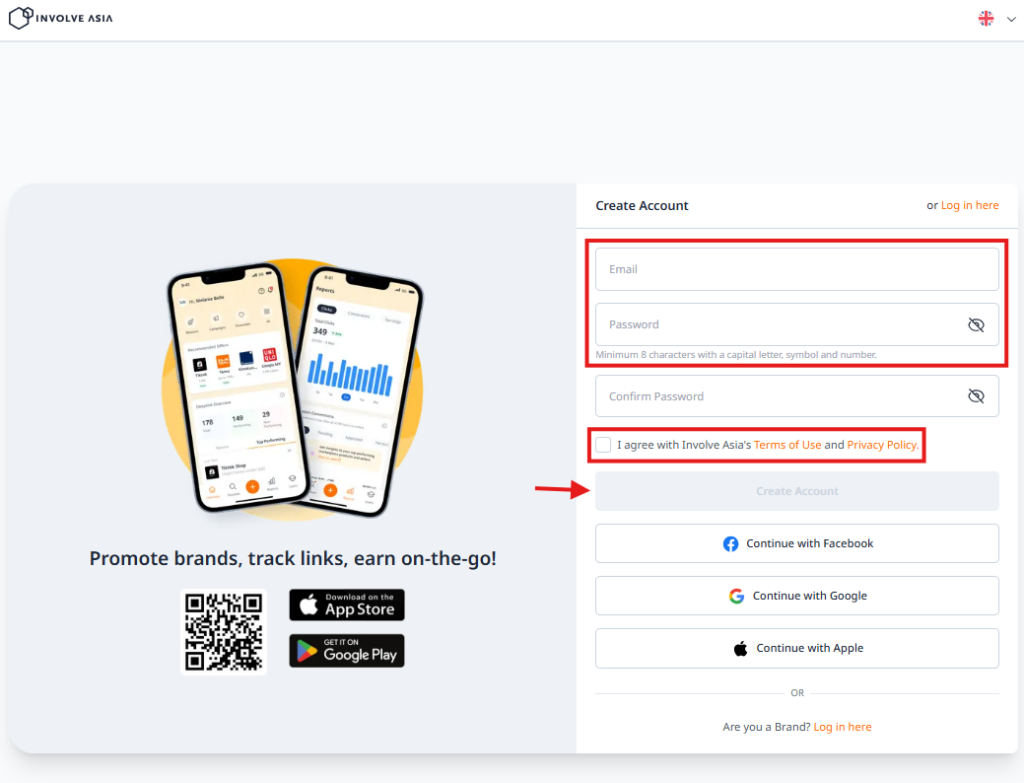
Step 3: Sign up to an affiliate network
Affiliate networks are the most efficient way to access multiple brand programs in one place. Rather than approaching each brand individually and managing separate tracking links, dashboards, and payment cycles for every program, a network consolidates everything.
Involve Asia is Southeast Asia’s leading affiliate network, with over 500 active brand programs across e-commerce, travel, finance, technology, health and beauty, mobile apps, and more – all accessible from a single publisher dashboard.
Step 4: Apply to programs that fit your audience
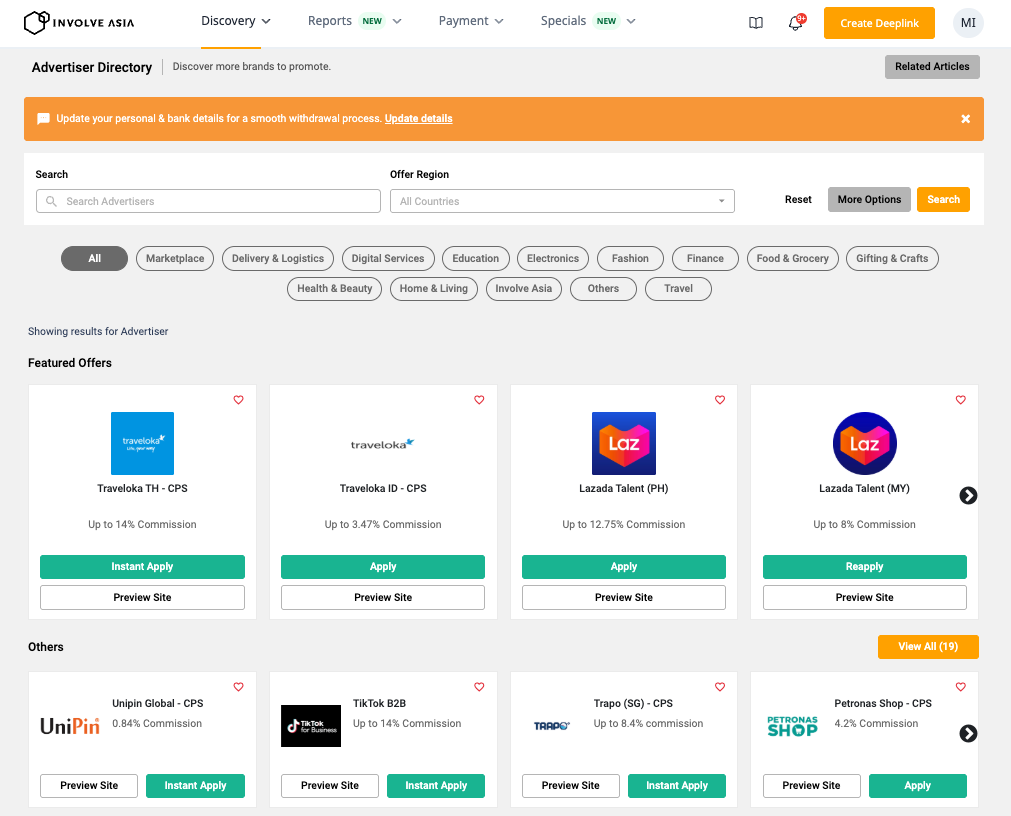
Browse the Involve Asia publisher marketplace and apply to programs whose products align with your content niche and audience interests. Review each program’s commission rate, cookie window, product quality, and brand credibility before applying.
Prioritise programs where you can genuinely recommend the product – authentic recommendations consistently outperform transactional ones in both conversion rate and audience trust.
Step 5: Create content that drives conversions
Once approved, generate your tracking links and integrate them naturally into your content – review articles, comparison posts, tutorial videos, social captions, email newsletters, or wherever your audience engages with you most.
The most effective affiliate content answers questions your audience is already asking, demonstrates genuine value, and includes a clear call to action that makes the next step obvious.
Step 6: Track, optimise, and diversify
Review your affiliate performance data regularly – which links drive the most clicks, which programs convert best, and which content formats produce the highest commissions. Double down on what works.
Diversify across multiple programs and categories to build a more stable income base. And continuously invest in growing your audience, because a larger, more engaged audience amplifies every commission program you’re part of.
What Tools and Skills Do Affiliate Marketers Need?
You don’t need an expensive toolkit to start as an affiliate marketer – but there are skills and tools that significantly accelerate results for publishers at every level.
Essential skills
- Content creation – Writing, video production, photography, or audio – whichever format suits your channel. The quality of your content is the primary driver of audience trust and conversion rate.
- SEO basics – Understanding how to research keywords, structure content for search, and build authority through quality content is one of the highest-value skills a publisher can develop. Organic search traffic compounds over time – content that ranks today can drive commissions for years.
- Audience understanding – Knowing what your audience is interested in, what problems they’re trying to solve, and what purchasing decisions they’re considering is more important than any technical skill.
- Analytics literacy – Being comfortable reading performance data – traffic, click-through rate, conversion rate, EPC – and using it to make decisions about which programs to prioritise and which content formats to scale.
- Consistency and patience – Affiliate marketing income compounds over time. The publishers who succeed are those who produce quality content consistently for long enough to build an audience, rank for relevant keywords, and accumulate a portfolio of high-performing affiliate placements.
Helpful tools
- Affiliate network dashboard (Involve Asia) – Your primary tool for finding programs, generating tracking links, monitoring performance, and withdrawing commissions.
- Content management system – WordPress is used by the majority of affiliate bloggers for its SEO flexibility and plugin ecosystem.
- Keyword research tool – Ahrefs, SEMrush, or Google Search Console helps identify the search queries your target audience is using, so you can create content that ranks and drives organic traffic.
- Email marketing platform – If you run a newsletter, tools like Mailchimp, ConvertKit, or Beehiiv manage subscriber lists, send campaigns, and track click-through rates from email.
- Link management tool – A tool that lets you create clean, branded short links from your tracking URLs – making affiliate links more trustworthy and easier to manage across multiple platforms.
Why Is Southeast Asia a Great Place to Do Affiliate Marketing?
Southeast Asia is one of the most dynamic and opportunity-rich environments for affiliate marketers in the world right now.
Several structural factors make the region particularly compelling for publishers who want to build a significant affiliate income:
- Rapidly growing e-commerce – SEA’s e-commerce sector is among the fastest-growing in the world, with millions of new online shoppers entering the market annually.
- Mobile-first consumers – Content optimised for mobile audiences and app-focused affiliate programs are particularly well-positioned in the region.
- Cashback and deal culture – Southeast Asian consumers are highly engaged with cashback platforms, coupon communities, and deal aggregators. Publishers who operate in this space have access to audiences with strong purchase intent and high conversion rates.
- Diverse, growing brand ecosystem – Southeast Asia is home to major regional brands (Shopee, Lazada, Traveloka) as well as hundreds of global brands that are actively investing in the region. All of these brands need publishers to drive traffic and sales – and many offer competitive commission programs through Involve Asia’s network.
- Multilingual content opportunity – The linguistic diversity of SEA – Bahasa Indonesia, Bahasa Malaysia, Filipino, Thai, Vietnamese, and more – means that publishers who create quality content in local languages face significantly less competition than in English-language markets, while still having access to large, engaged audiences with strong purchasing power.
How Does Involve Asia Help Affiliate Marketers Earn More?
Involve Asia is Southeast Asia’s leading affiliate marketing network, established in Malaysia in 2014. The platform connects publishers like you with over 500 active brand programs across seven SEA markets – giving you access to a curated marketplace of quality advertisers, competitive commission programs, and real-time performance tracking from a single dashboard.
Access to 500+ brand programs in one place
Rather than approaching brands individually and managing separate tracking links and payment cycles, Involve Asia consolidates everything into one publisher account.
Browse programs across e-commerce, travel, finance, technology, health and beauty, mobile apps, digital services, and more. Apply to the programs that fit your niche and audience – and start earning commissions from multiple brands through a single platform.
Multiple commission models
Involve Asia supports CPS, CPL, CPA and CPI programs – giving publishers flexibility to choose commission structures that match their content type and audience behaviour. A tech blogger might earn CPS commissions from software brands and CPI commissions from mobile app developers.
A travel creator might earn CPS from booking platforms and CPL from travel insurance brands. The ability to diversify across commission models creates a more stable and resilient income base.
Real-time performance dashboard
Your Involve Asia publisher dashboard gives you live visibility into clicks, conversions, pending and approved commissions, and program performance – all in one place. Track which programs are generating the most income, which content is driving the most clicks, and which offers your audience responds to best. Use this data to optimise your promotional strategy and prioritise the programs that deliver the strongest returns.
Regular new programs and featured offers
Involve Asia adds new advertiser programs regularly, with featured offers and campaign spotlights that highlight high-commission or limited-time opportunities. Publishers who stay active on the platform benefit from first access to new programs in their category – including commission upsize events where brands temporarily increase their rates to drive more publisher promotional activity.
Reliable, transparent payments
Commission payments are processed on a regular schedule once approved by the advertiser, with full transparency on what was paid, for which conversions, and on which date. Involve Asia has paid publishers reliably since 2014, with over USD 2.6 billion in sales driven through the network.
Publishers on the platform have a proven, trusted infrastructure behind every commission they earn.
A community and support system
As a publisher on Involve Asia, you’re not operating in isolation. The platform’s team actively communicates with publishers through regular campaign updates, new offer announcements, and educational content that helps you grow your affiliate income over time.
Whether you’re joining your first program or managing a portfolio of dozens of brands, Involve Asia’s support infrastructure gives you the foundation to build a serious affiliate marketing income in Southeast Asia.

Conclusion
So, what are affiliate marketers? They’re publishers, creators, and digital entrepreneurs who have found a way to monetise their content, their audiences, and their promotional skills – by connecting people to products they genuinely recommend, and earning a commission every time that connection drives a result.
Affiliate marketing is not a get-rich-quick scheme. The publishers who earn the most have invested time in building genuine audiences, creating quality content, and optimising their program portfolios over months and years. But it is one of the most accessible, scalable, and genuinely rewarding ways to build an income online – particularly in Southeast Asia, where a growing e-commerce ecosystem and a pre-built publisher network through Involve Asia give new publishers a significant head start.
Key takeaways:
- Affiliate marketers earn commission by promoting brands’ products to their audiences – through content, social media, email, or paid media – and getting paid when their audience converts.
- The main commission models are CPS (sale), CPL (lead), CPI (install), and CPA (action) – each suited to different publisher types and content formats.
- Experience compounds significantly – publishers with 3+ years earn 9.45x more than beginners, driven by larger audiences, more content, and better program optimisation.
- Southeast Asia is one of the fastest-growing affiliate marketing regions in the world – with a mobile-first consumer base, strong cashback culture, and a growing ecosystem of quality advertiser programs.
Ready to start earning as an affiliate marketer across Southeast Asia?
About the Author

Frequently Asked Questions (FAQs)
What is the difference between an affiliate marketer and an influencer?
An influencer is typically paid a flat fee to promote a product to their audience, regardless of how many sales or conversions that promotion generates. An affiliate marketer earns a performance-based commission – they only get paid when their promotion drives a defined result, like a sale, a lead, or an app install. Many modern creators are both: they receive flat fees for content creation and affiliate commissions for the conversions their content drives. Affiliate marketing is increasingly the preferred model for brands because it ties payment to results, and for creators because it can generate passive income long after content is published.
Do I need a large audience to start affiliate marketing?
Audience quality and relevance matter far more than size. A niche blogger with 3,000 highly engaged readers who trust their recommendations will consistently outperform a general lifestyle account with 100,000 followers when promoting a relevant product. Many successful affiliate marketers start with modest audiences and build income gradually as their content accumulates, their SEO rankings improve, and their audience grows. Involve Asia accepts publishers at all stages – from beginners with growing platforms to established creators with large, active audiences.
How long does it take to start earning from affiliate marketing?
The timeline varies by channel and approach. Publishers using paid media can generate conversions within days of launching a campaign. Social media publishers often see their first commissions within the first one to four weeks of actively promoting a brand or product. Content publishers using SEO typically take longer – three to six months for content to rank and drive consistent organic traffic – but their income compounds significantly once established. Most new affiliate marketers see their first commissions within the first month of active promotion, with meaningful monthly income developing over three to twelve months of consistent effort.
How do I get paid as an affiliate marketer on Involve Asia?
Commissions earned through Involve Asia are tracked in real time in your publisher dashboard. Once a conversion is confirmed and approved by the advertiser, the commission is added to your pending balance. Involve Asia processes payments on a regular schedule, with multiple withdrawal options available depending on your market. Your dashboard shows a full breakdown of pending and approved commissions, payment history, and the specific conversions that generated each commission – giving you complete transparency over your earnings.