This article was last updated on:
Affiliate marketing is one of the most accessible ways to earn online, but many publishers struggle to see results because they make avoidable mistakes.
This guide covers the common mistakes in affiliate marketing, how they affect your performance, and how to avoid them using Involve Asia.
Key Takeaways
- Most affiliate marketing mistakes come from poor strategy or weak execution
- Choosing the right products is one of the biggest factors in conversion
- Deeplinks and campaigns can significantly improve performance
- Different experience levels face different types of mistakes
- Tracking data and optimising consistently are essential for long-term growth

What Are the Most Common Mistakes in Affiliate Marketing?
Most affiliate marketing mistakes fall into three areas:
- Strategy mistakes
- Content mistakes
- Execution mistakes
These directly affect your clicks, conversions, and affiliate earnings.
What Are the Top Common Mistakes in Affiliate Marketing?
1. Promoting the Wrong Products
Promoting irrelevant or low-demand affiliate products is one of the biggest reasons publishers fail to convert traffic into commissions. If the product does not match your audience’s needs, even strong content will struggle to drive sales.
What to do instead: Choose products that fit your niche, audience behaviour, and content style. Focus on categories with real demand and clear buying intent.
2. Not Using Deeplinks
Sending users to a homepage instead of a specific product page adds extra steps before they can buy. This increases drop-off and lowers conversions.
What to do instead: Use deeplinks whenever you are recommending a specific product. Direct links usually convert better because they reduce friction.
Below is a sample of a SHEIN deeplink that leads the audience to a specific product page – instead of SHEIN’s homepage.

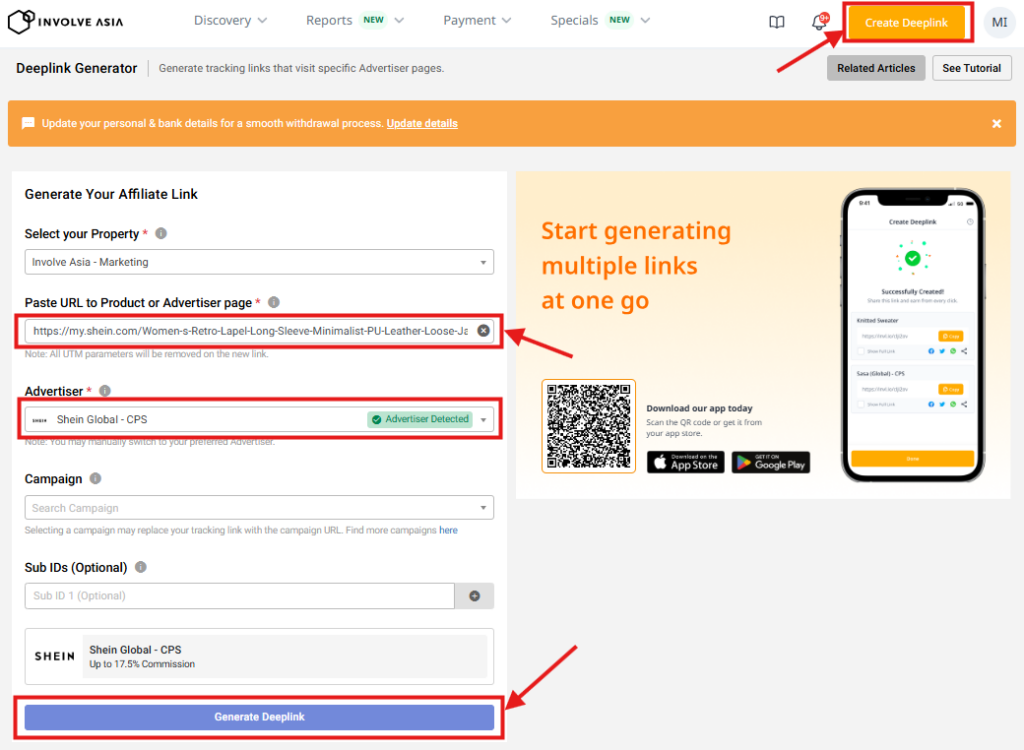
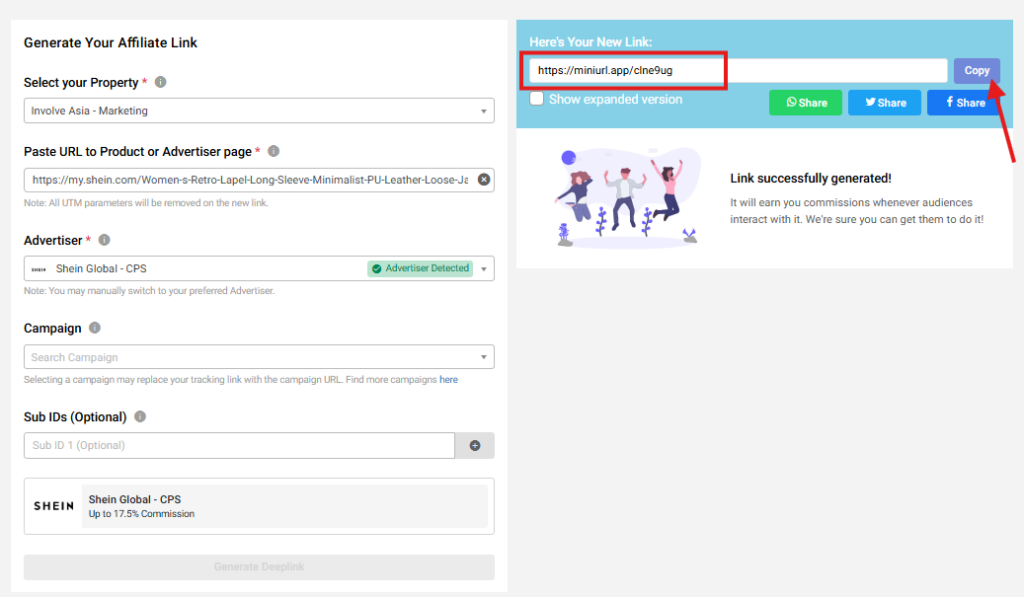

Read: How to Generate Deeplinks on Involve Asia
3. Ignoring Campaigns and Promotions
Many publishers miss out on high-converting periods by ignoring affiliate campaign opportunities such as 9.9, 10.10, 11.11, and 12.12. These periods often come with stronger buyer intent and better commissions.
What to do instead: Build content around active campaigns, discounts, and limited-time offers. Campaign periods can create significant revenue spikes when promoted well.
4. Using Weak or No Call-to-Action
Even useful content can underperform if users are not clearly guided on what to do next. Without a strong CTA, readers may leave without clicking your affiliate link.
What to do instead: Use simple, direct calls-to-action such as “Shop Now,” “Check Price,” or “View Deal.” Make the next step obvious.
5. Not Tracking Performance
If you do not review your data, you will not know what content is working, what products convert, or where users are dropping off.
What to do instead: Use the Performance Report and Conversion Report in the Involve Asia dashboard to track clicks, conversions, and earnings regularly.
Affiliate Marketing Mistakes and Their Impact
| Mistake | Impact | Quick Fix |
|---|---|---|
| Wrong product selection | Low conversions | Match product to audience |
| No deeplinks | Higher drop-off rate | Link directly to product pages |
| Ignoring campaigns | Missed revenue spikes | Promote during sale periods |
| Weak CTA | Lower click-through rate | Add clear action prompts |
| No tracking | No optimization | Use performance reports |

What Mistakes Do Beginners, Intermediate, and Advanced Publishers Make?
Beginner Mistakes
Beginners often make mistakes because they are still learning how affiliate marketing works.
- Promoting too many random products
- Not understanding how affiliate links work
- Expecting fast results
- Not applying for offers properly
Main focus: Learn the basics, choose the right affiliate offers, and stay consistent.
Read: Best Affiliate Programs on Involve Asia for Beginners
Intermediate Mistakes
Intermediate publishers usually understand the basics but struggle with optimisation.
- Not improving content based on performance
- Ignoring reports and data
- Using generic links instead of deeplinks
- Missing campaign opportunities
Main focus: Improve performance through better strategy and optimisation.
Advanced Mistakes
Advanced publishers often make mistakes when scaling.
- Scaling without checking ROI
- Depending on only one traffic source
- Ignoring audience trust
- Not testing new content formats
Main focus: Scale carefully, diversify channels, and maintain quality.
Affiliate Mistakes by Level
| Level | Common Mistakes | Focus Area |
|---|---|---|
| Beginner | Wrong products, no strategy, poor understanding of links | Learning fundamentals |
| Intermediate | No optimisation, weak content structure, missed campaigns | Improving performance |
| Advanced | Poor scaling decisions, limited channels, weak ROI review | Growth and expansion |
Why Do These Mistakes Matter So Much?
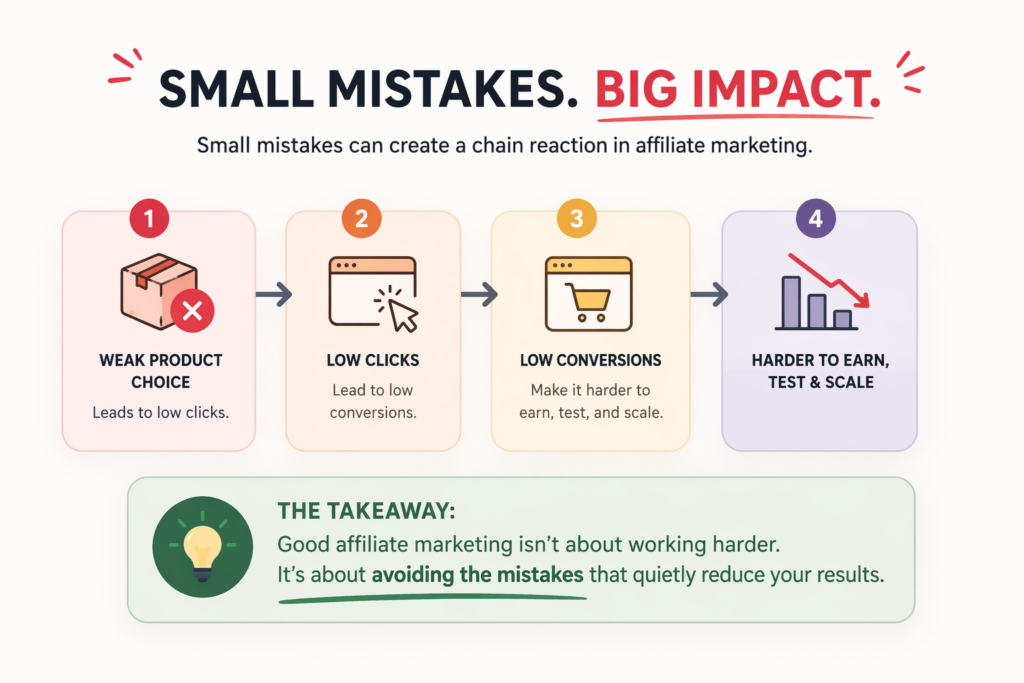
Small mistakes can create a chain reaction in affiliate marketing. A weak product choice leads to low clicks. Weak clicks lead to low conversions. Low conversions make it harder to earn, test, and scale.
That is why good affiliate marketing is not just about working harder. It is about avoiding the mistakes that quietly reduce your results.
How Can You Start Minimising Risk and Avoiding Mistakes?
Affiliate marketing always involves testing, but you can reduce unnecessary mistakes by following a more structured approach.
1. Start with the Right Offers
Choose trusted brands, relevant products, and offers with real demand. This gives you a stronger starting point and reduces wasted effort.
2. Use Data to Guide Decisions
Do not guess what works. Review your clicks, conversions, and earnings regularly to identify what content and products deserve more attention.
3. Focus on High-Intent Content
Create content that supports buying decisions, such as reviews, comparisons, and buying guides. These formats usually convert better than generic content.
4. Leverage Campaign Periods
Plan content around major sale events and active promotions. Campaign periods often give you stronger conversion potential and more urgency.
5. Test and Optimise Continuously
Affiliate marketing improves over time. Try different products, content formats, and calls-to-action, then refine based on results.
The goal is not to avoid every mistake. The goal is to catch them early, learn quickly, and improve faster.
What Does a Strong Affiliate Strategy Look Like?
| Weak Approach | Strong Approach |
|---|---|
| Promote random products | Promote targeted, relevant products |
| Use homepage links | Use deeplinks for specific products |
| Ignore reports | Use data to improve decisions |
| Create generic content | Create high-intent content |
| Miss campaigns | Plan around campaigns and promotions |

Conclusion
Making mistakes in affiliate marketing is normal, especially when you are learning. But repeating the same mistakes without adjusting your strategy can hold back your growth for a long time.
With Involve Asia, you have access to the tools, offers, campaigns, and reports needed to improve your performance. The more you track, test, and optimise, the more your affiliate strategy will mature.
The goal is not perfection. The goal is continuous improvement.
About the Author

Frequently Asked Questions (FAQs)
What are the most common mistakes in affiliate marketing?
The most common mistakes include promoting irrelevant products, not using deeplinks, ignoring campaign periods, having weak calls-to-action, and not tracking performance. These mistakes can reduce conversions and limit your overall earnings.
Why do beginners fail in affiliate marketing?
Beginners often fail because they lack a clear strategy, promote too many unrelated products, and expect quick results. They may also misunderstand how affiliate links and approvals work, which can prevent them from earning commissions.
How can I avoid mistakes in affiliate marketing?
You can avoid mistakes by choosing the right products for your audience, using deeplinks for better conversions, tracking your performance regularly, and focusing on high-intent content such as reviews and comparisons. Consistent testing and optimisation are key to improving results.
What mistakes do intermediate affiliate marketers make?
Intermediate affiliates often struggle with optimisation. Common mistakes include ignoring performance data, not improving content, missing campaign opportunities, and continuing to use generic links instead of targeted deeplinks.
How do advanced affiliate marketers make mistakes when scaling?
Advanced affiliates may make mistakes by scaling too quickly without analysing ROI, relying on a single traffic source, or neglecting audience trust. Successful scaling requires data-driven decisions, diversification, and maintaining content quality.